
Responsible Companies team of Frank Bold has developed a legal briefing outlining what companies, business partners and investors need to know about the new restrictions on sustainability-related information requests introduced by the Omnibus 1 revisions to the CSRD and CSDDD.
Companies covered by the Corporate Sustainability Reporting Directive (CSRD) and the Corporate Sustainability Due Diligence Directive (CSDDD) are required to obtain sustainability-related information from their value chain partners. This information is needed for sustainability reporting and due diligence purposes.
Following the Omnibus 1 Directive, new restrictions now apply to the way companies can request information from suppliers and other business partners. These restrictions are intended to prevent disproportionate information demands. They include the value chain cap under the CSRD and the limits on information requests under the CSDDD.
For companies falling within the scope of these rules, it is important to understand when information requests remain legitimate and how the new limitations affect their interaction with value chain partners.
The publication also identifies legal uncertainties linked to the European Commission’s proposed Voluntary Standard, especially regarding due diligence scoping, greenhouse gas data and climate risk information.
It also sets out practical steps that companies can take to preserve effective supply chain management while complying with the new caps.
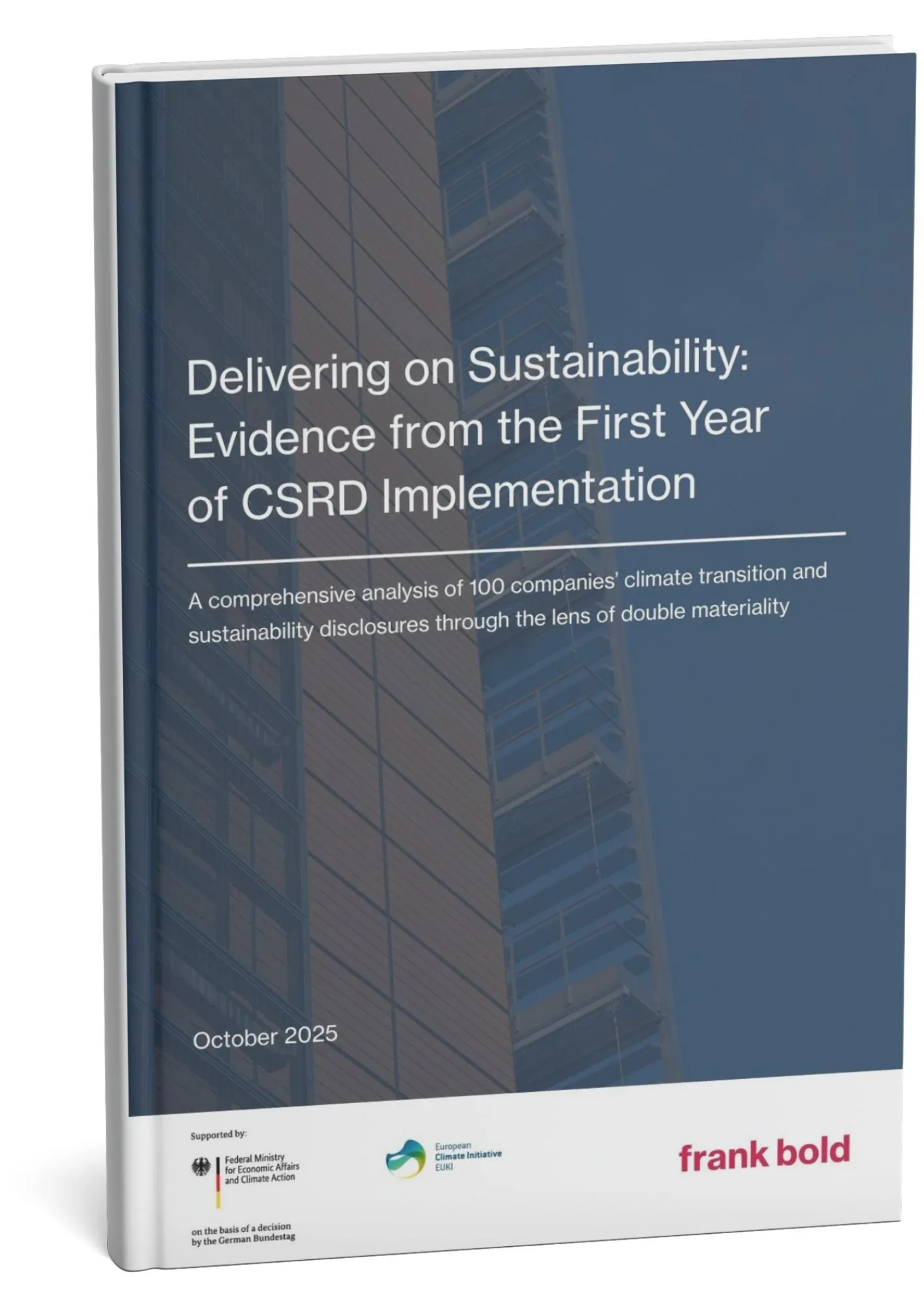
Discover how European companies are managing ESG reporting. The new study by Frank Bold’s Responsible Companies team summarizes the first wave of sustainability reports from one hundred major European companies and shows that reporting under the CSRD provides valuable data for decision-making and is becoming an effective tool for risk management. Publication is part of the European Climate Initiative (EUKI) of the German Federal Ministry for Economic Affairs and Climate Action (BMWK).

Comprehensive Sustainability Report aligned with CSRD.
.webp)
A simplified ESG report for your business partners.

Mapped according to GHG Protocol Product Standard.
We are part of the Frank Bold Expert Group
Copyright ©
Aktuální rok script
Frank Bold